Decorating
Hang Art Above a Sofa From the View Across the Room
Find a useful width, height and spacing for one work or a group, then check the artwork from the doorway and from seated eye level.
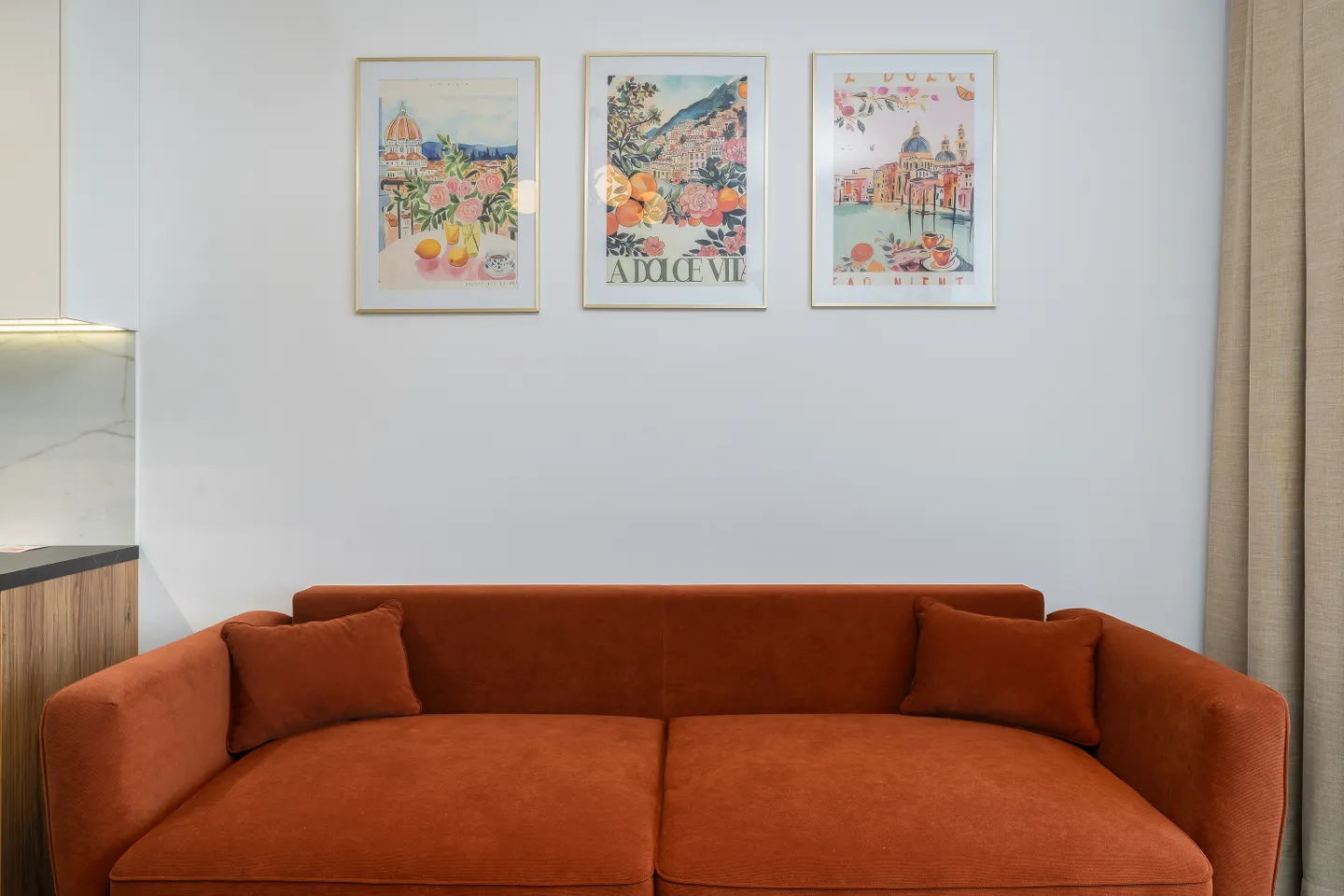
When a picture looks too high over a sofa, the problem usually appears from the chair across the room. The artwork and the sofa leave a conspicuous band of wall between them. The same picture might seem fine when you are standing in front of it, holding a hammer. This is why a universal gallery height solves only part of the job. In a living room, artwork belongs to a view that includes the seating, the floor below and sometimes a tall lamp or window nearby. Place it where those parts make a coherent shape.
Choose the view in advance. If the first glimpse of the art is from the entrance to the living room, an arrangement that looks centered at close range may look more closely related to the window than to the sofa from the doorway. If people spend most time opposite the wall, find the height of their eyes when seated. Look across a room with its usual lamps and curtains. This is a visual placement exercise, and the way the picture can be fixed to the wall will need its own check.
Decide which width you are working with
Measure the full sofa width, including the arms. Also measure the extent of the visual group, which might include a corner table or an asymmetrical chaise. A sofa that is centered on a panel of wall suggests a placement aligned to the body of the sofa. A sectional that extends farther on one side sometimes reads as two pieces of furniture from the doorway. Try centering over the seat run directly beneath the picture and comparing that with centering over the wall. Use measurements as starting points and check both positions with templates.
Cut a paper shape the size of the frame, including the outer molding. Friends can hold several shapes to the wall or you can use a suitable low-tack product on a sound surface where the finish allows it. Start with a picture that covers a meaningful share of the sofa width. If it seems thin, two smaller works could be given an arrangement or a wider mat could increase the full frame size. A single small piece may suit the room if it hangs intentionally near the lamp, in a narrow panel or above one seat as part of a larger composition. Its small size then reads as a decision.
Check the blank areas at the edges. A very wide piece arranged over a small loveseat can look unrelated if it extends close to a side wall or overlaps the width of a neighboring cabinet. A narrow gap beside a window casing can give the impression that the artwork belongs to the window. Move the template inward and see whether the wall provides enough separation. When sizing a frame, leave room for your hands and the hardware needed to hang, adjust or remove it safely.
Lower the template and try sitting down
Put the template at a height that leaves a little breathing room above cushions and upholstery. Sit across the room. Does your eye travel easily between the work and the top of the sofa? Try moving the template by a few inches and look again. The measured position that works in one room depends on the frame, ceiling, upholstery and stature of the people standing behind or sitting on the sofa. A consistent gap between artwork and furniture can make the group feel calm, even if the center of the picture sits below an eye-level mark used on an empty wall.
Test the highest regular cushion position and the clearance behind people. A high-backed couch can hide the bottom edge of a frame when the two sit very close. Someone leaning back should not touch the artwork, and a person straightening a cushion should not bump it. Pay special attention to anything with a heavy or projecting frame. If the sofa allows vigorous movement against the back or the wall is in a high-shake environment, consider safer artwork placement and get professional advice about mounting.
A sofa that stands away from its wall changes the visual depth. The back of the sofa may project beneath the art from one perspective, while the ceiling and wall move farther away from the seated view. From the doorway, see whether the two still align. If the art is supporting a wall arrangement independent of the seating, it can be adjusted toward that wall grouping. Avoid trying to satisfy two distant axes with a compromise that looks accidental from both views. Pick the one everyday view that deserves priority.
Treat a group as a single object with internal edges
Set out several frames on a protected tabletop or clean floor. Keep the orientation and the approximate viewing distance in mind. Use a consistent spacing when the works share scale and subject. If you have a tall piece beside two short ones, compare their outer mass rather than trying to line up every edge. One common bottom or top can help two unrelated frames belong to the same group. Leave enough space between thick moldings so the dark shadow from the edge does not swallow the intended gap.
Use the art itself to select the order. A work with a dark field or strong red details may carry more weight than a pale drawing of the same size. Put the strongest element where it works with the room. A dark cabinet on one side of the sofa might call for a quieter print nearby, while an empty side of the wall could use the weight of a darker image. With three prints of equal importance, unfold the order on the floor and then turn it around. Sometimes the direction a figure looks in a drawing can make a group feel more internally connected.
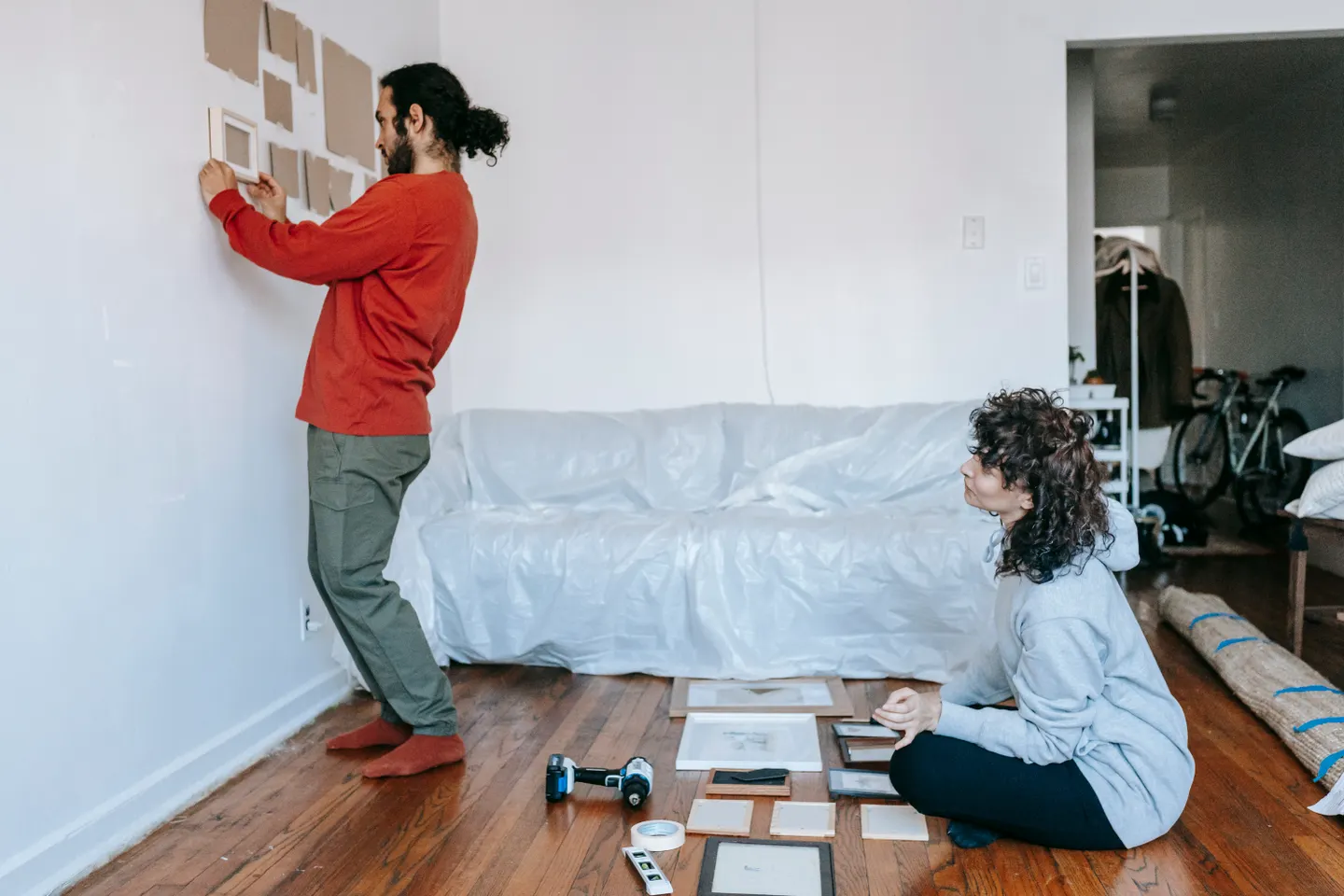
Transfer an arrangement to paper before choosing where any hooks belong. Mark each outer frame and the spacing to the next one. On a wall with a small amount of texture, a very fine line may be hard to find again. Use marks you can remove safely from that finish. Once the templates are in place, consider the composition from the opposite seat, the doorway and any view from an adjoining dining room. Adjust a template while it is cheap to change. Measure and mark hanging points only after the outer edges are in promising positions.
Check shade and reflection under normal light
If the art sits behind glass, stand where you will actually see it and watch for reflected lamps, daylight and the television. A strong reflection may hide only a few parts of the image. That still matters if the work you love is unreadable each evening. Try moving an adjustable lamp or closing the curtains to see where the reflection comes from. Matte or suitable low-reflection glazing can change the view. Ask a framer which type is appropriate for the work and see a sample if possible.
Avoid choosing an artwork’s position solely on the quality of one sunny day. Prolonged light exposure can matter to paper and textiles. Check framing and conservation choices for anything valuable or sensitive. A framed print that is inexpensive and easily replaced has different needs from an inherited textile. Take the regular light and heat conditions into account before hanging either one. Be particularly careful around a nearby heater, fireplace or strong light source.
An accent lamp can bring out a picture in a dim room. It can also sit directly in the reflection. When comparing options, set the lamp in its normal position and ask someone to move the paper mock-up slightly while you sit opposite. Choose a safe lighting setup and appropriate fixture if you install a dedicated picture light. With some shaded art, a soft wall wash from an existing lamp is enough to make it visible and keeps the focus on the image.
Plan the hardware for the weight and wall
Check the frame maker's hanging instructions and determine the weight. Use fixings suited to the wall and the load, and confirm that the position is safe to drill. Drywall, masonry, historic plaster and paneling require different choices. A larger, heavier piece or a place above regularly occupied seating is a reason to choose secure hardware and get competent installation where appropriate. Check rental permissions. The distance between the top of the frame and its hardware can affect the fixing height substantially, especially with wire that moves under load.
Find out whether the frame must use two points or a mounting bracket. Make a small diagram of the intended fastener spacing and the height relative to the top of the template. Put the heavy frame in a protected position while checks are made. During installation have enough help to hold the frame without lifting above seated people. Remove the paper and confirm the art sits where the template predicted. A level and a fresh view from across the room are more useful at this stage than continued measurement of the whole room.
After you have lived with the arrangement for a few days, look at where you naturally see it from the doorway and where you sit. A successful height is the one at which you can enjoy the work as part of the room, with space around it and no uncertainty about how it is held in place.