Materials
Choose Curtain Fabric by Testing It Against the Light
Compare sheer, woven and lined curtain fabrics in daylight and at night, then account for fold depth, stack width, cleaning and drape.
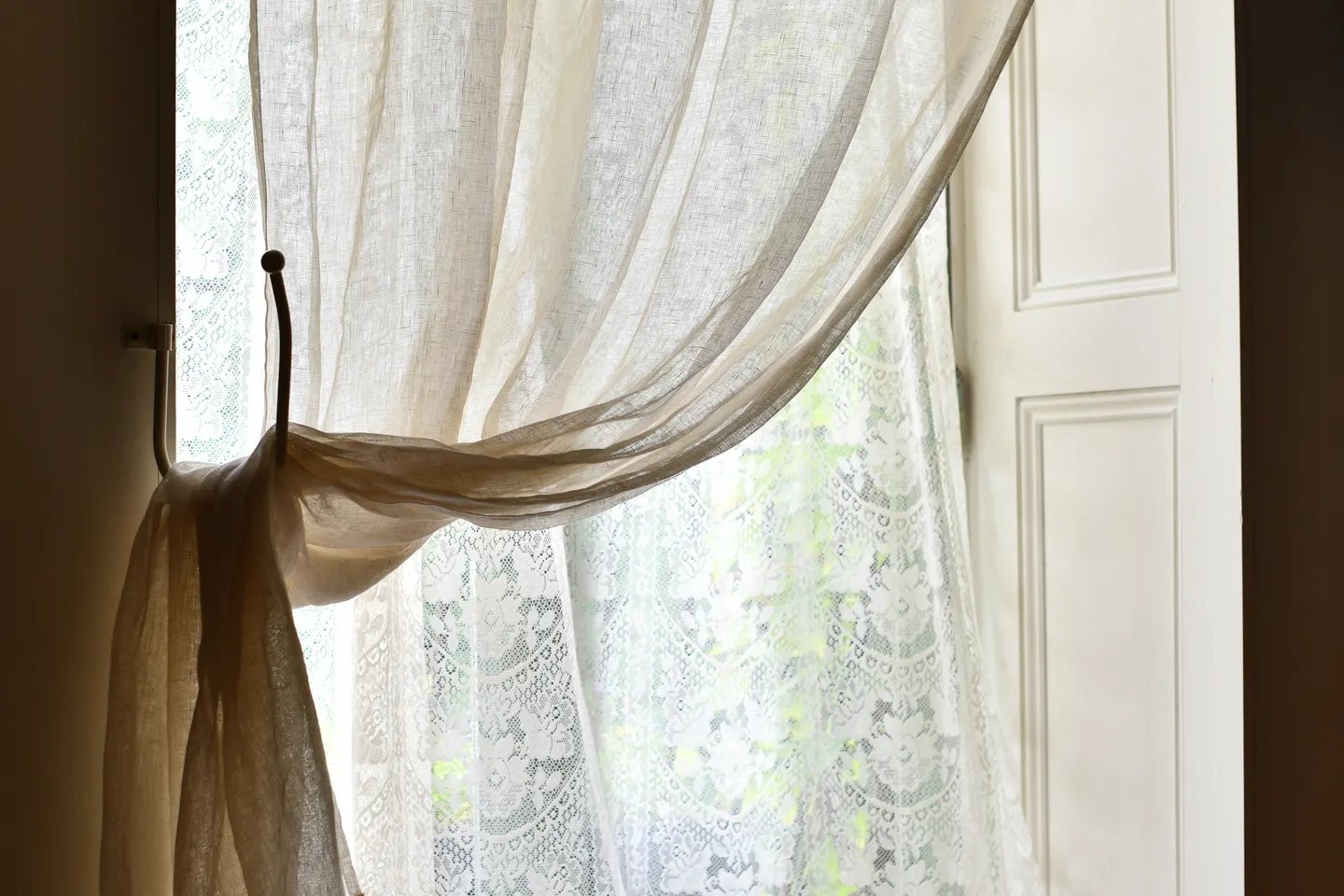
Curtain fabric can make a window glow, soften a sharp square of sun on the floor or screen a room from the street after dark. Those are different jobs. Hold a substantial sample in front of your own window at the time you normally use the room. Then test it with a lamp on inside and darkness outside. A fabric that filters exactly the right amount of daylight can need a separate layer for privacy at night. Once you know what the cloth does in both directions, size a panel you will enjoy opening and closing.
Describe the light you want to change
Start with the problem in the room. An east-facing bedroom might need the early sun kept out while still benefiting from a soft warm wash of light later. A living room with an afternoon hotspot might need a fabric that breaks up glare on a seating area without making the distant wall too dim. In a street-level room, you may want to reduce the visible detail from outside without losing the sense of daylight inside. These aims may coexist, but one cloth can rarely be chosen well until you know which one takes priority.
Observe the window while you sit and stand in the room. A bright patch on a table is a different problem from looking directly at an uncovered window. If the patch shifts across your ordinary reading place, try spreading the light instead of blocking most of it. If the window itself stays distractingly bright, a denser layer or more coverage at the edge can help. Look through the window during a typical overcast period as well. The cloth that is pleasing in direct sun may feel more substantial when the sky is dim.
Record the side of the window where any screen, furniture or neighboring building casts shadow. If the window has a deep reveal or exterior obstruction, the room may already lose some light even with the curtain open. The US Department of Energy's window attachment report discusses the distinct roles of glare and solar heat. Energy performance depends on the full window, the attachment and how it is operated. Treat a fabric sample as a test of appearance and everyday use in the location you actually have.
Test transparency with a large enough sample
Ask for a sample large enough to fold loosely or obtain permission to borrow a display panel. A tiny fabric square can tell you a lot about color and texture and very little about what goes on along a fold. Hang the sample at about the height and distance from glass it would have in the finished installation. Hold a plain object or card behind it, and look from ordinary seating and standing positions. Try it flat and gathered, since a fold introduces several layers across part of the view. Compare a light and a dark object from roughly the distance a neighbor might see.
For a daytime comparison, use the same window section and exposure for each fabric. You can photograph the plain glass and the swatch with camera exposure held fixed if your camera permits it. Automatic exposure often brightens a scene after you cover the window, making two fabrics look more similar than they do in person. Use photographs as a record of your trial, and make the decision with your eyes at the actual seat. If the supplier provides a tested visible light transmission value, compare products assessed by the same method. Small sample testing also helps reveal how much the cloth scatters the view.
After dark, turn on the interior fixtures that will usually be lit with the curtains drawn. From an accessible outside position, look toward the room with a helper's permission, or stand in a darker adjoining space and view the sample against a brightly lit room. Move a person closer to and farther from the cloth. Many open weaves reveal silhouettes when the brighter light comes from the interior. If you need strong nighttime coverage, an operable lining, second curtain or separate shade may give you more control while keeping a sheer layer for daytime.
Read the construction and look closely at the drape
A sheer uses openings or fine yarns to let a substantial amount of light through. A close plain weave can soften an outline while making the color of the curtain more visible. A looser cloth with thicker threads may show small bright points and a pronounced pattern in sunlight. Fiber names describe the raw material and part of how a fabric behaves. Weave, finishing, thickness and color also help determine whether a piece looks airy on the rod. Compare swatches that share a fiber name but vary in density before relying on a category description.
Hold the intended heading at the top of a sample and make folds by hand. A very crisp cloth can stand away from the window on deep folds. A soft one can drape into smaller folds and pull against the edge of a track. A lined cloth weighs more and can hang in a broader arc. Bring a sample of each fabric around the window handle and observe where the curtain might catch when the sash is used. The textile and the hardware share the same limited space.
Notice the color against the floor and wall once the light is behind the cloth. Some warm tones become much brighter in direct sunlight. Darker fibers can make areas between the folds look nearly black at the brightest hour. Compare the front and back of a fabric with a different appearance on each side. A lining can make the street-facing view more even if the building has requirements for how windows look from outside. Check those requirements before placing an order.
Size the finished weight and stack
Decide where each panel will park when open. Its stack width depends on the heading, fabric weight, lining, fullness and track. A generous stack can cover the outer glass of a narrow window even after the curtain is fully open. If there is room to run a track past the glass, that can let the panels sit beside it. Where there is an alcove or neighboring cabinet, verify the available length before ordering. Ask the supplier about stack width for the real panels and header rather than using one fixed percentage for all curtain fabrics.
Measure top to bottom in several places. A floor may slope, and a long curtain can skim on one side and drag on another. If you regularly open the window or use a radiator nearby, include that movement and any necessary clearances in the finished drop. If a rail carries both a fabric panel and lining, its supports need to suit the overall load and wall type. A product advertised at a certain length may measure from a different point depending on heading style. Confirm where the measurement starts and where it stops after the panel is hung.
Check the leading edge where the curtains meet. A cloth can have excellent opacity and still leave a bright line at a center gap. In a bedroom, look at side returns, the top and the lower edge along with the fabric itself. In a room that needs useful daylight, see how far the curtain can open without bunching across the pane. Try the handle or draw position from the location you will stand. Use safe window coverings and management of cords around children, following CPSC guidance.
Match care to the real window
Ask how the curtain is cleaned and what happens after a panel is washed or professionally treated. Shrinkage, wrinkle recovery and linings affect shape. Steam near a kitchen window, dust from an open street-facing window and strong sun each create different care needs. A long lightweight sheer might be easy to take down. A large lined curtain may need two people to put back in place and a cleaning method that suits both layers. Keep the care instructions and note any compatible replacement fabric while the maker can still identify it.
For a pair with different layers, ask whether the face fabric and lining will hold their lengths in similar conditions. If the care label allows washing, a supplier may be able to explain what shrinkage to expect. A hem also changes how the light looks, particularly in a sheer. When it folds around itself, the lower edge appears darker than the body, and repeated panels make that line more visible. Compare a sewn display piece in addition to a loose fabric sample if that effect matters in front of your window.
Consider a compact front living room where breakfast is sunny and the hardest privacy test comes after dinner. A moderately open daytime layer can make the sun less sharp without losing the view of the window. A denser separate layer can close at night and open fully in the morning, provided the combined stacks fit. In a bedroom with late-shift sleep, a fitted shade may do most of the light control while the curtain is chosen for texture and useful drape. Mock up the layers separately so you know which one solves each problem.
Make a last comparison with the actual room occupied. Sit by the window, turn on the evening light and open the curtain as you normally would. Notice whether you keep adjusting the leading edge or hiding a section of fabric behind furniture. A good curtain fabric looks at home in its folds, gives you the light and privacy you tested for and is straightforward to handle again tomorrow.