Furniture
Find a Vintage Console Table That Survives the Hallway
Judge a vintage console by its depth, stability, finish and visible repairs before deciding whether it can work in a useful part of your home.
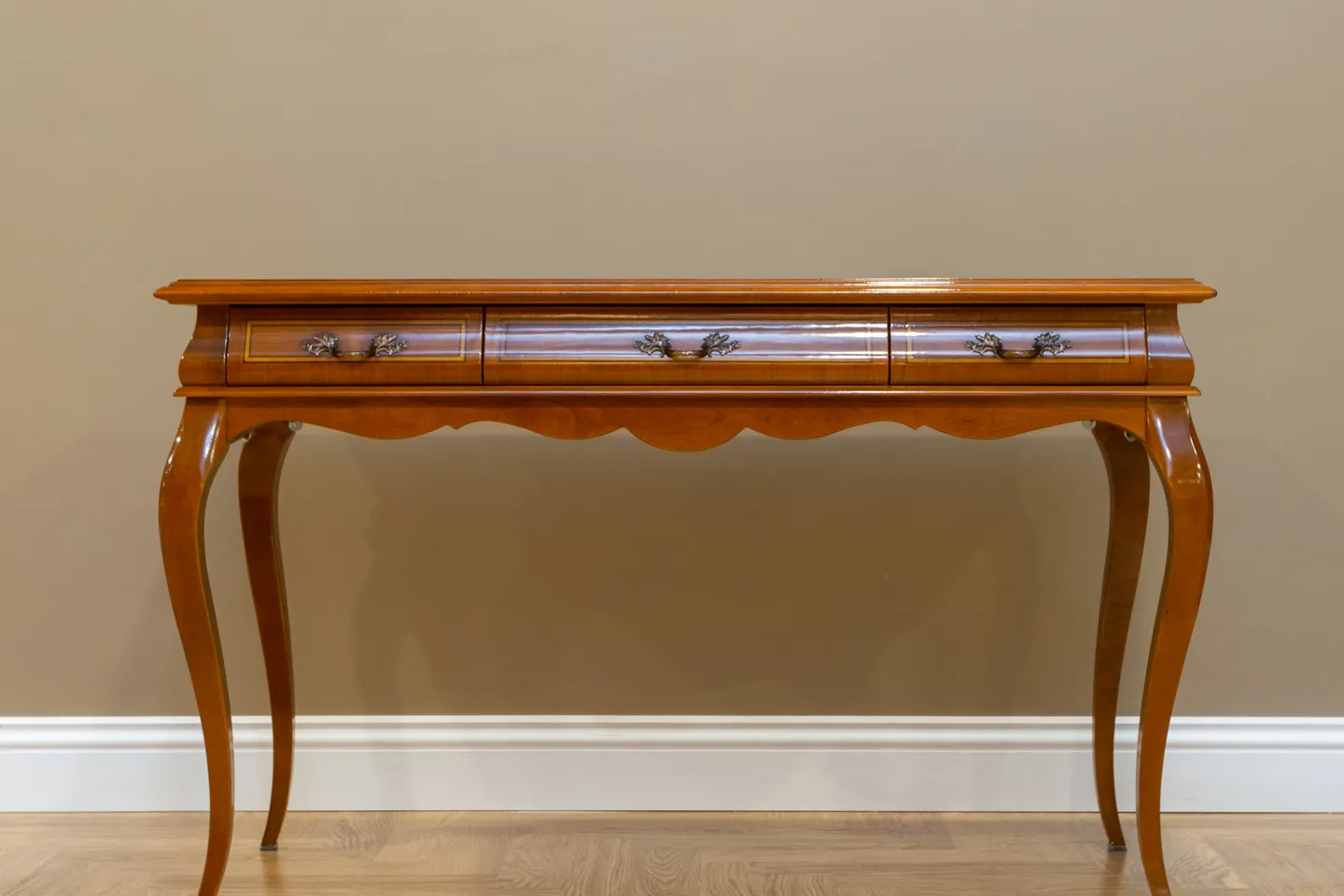
A narrow old table catches your eye at the back of the shop. It appears to have been made for your hallway until you notice that its long front legs curve forward, right into the route a shoulder bag would take. That extra bit of wood is among the details worth noticing before buying a console. The table has to work at the most hurried moment of someone's day as well as during a slow look at its finish.
Decide whether the table is for the entry, a longer interior wall or the back of a sofa. A good table for keys and the post may be too light to support a heavy lamp, or too high for the back of a low sofa. A table intended to stand securely against a wall may also call for appropriate anchoring. Think about its actual job and installation before negotiating a price.
Find the widest outline at the narrowest part of the hallway
Measure the hall at skirting level and at the proposed tabletop height. The floor can be wide near the door and narrow beside a steep stair or wall plate. Record the movement of the nearest handle and draw the pieces that project. Include the top, legs and any braces in your measurements. Some tables bring their feet forward to counterbalance a narrower top. Others have a stretcher or brace between the legs in a place that catches a cleaning tool.
Tape out the footprint and mark the top with a stable temporary object. Walk out in a coat and come back again carrying what you usually carry. Leave a bag near where people set it down. Follow the journey of an overnight case or the bicycle someone takes out once a week. Pay attention to when you turn your body. A tight route may become manageable when the broad surface starts a little farther away from the door, or when a different table holds the same objects near the wall.
If the hallway has more than one door, ask a second person to pass when one is open. Include necessary access, escape routes and any relevant building requirements in the decision. A table with a shallow drawer has a second outline with the drawer extended. Measure it while somebody stands in their normal position to look inside. It is useful only if one of the available actions takes place comfortably when another resident walks past.
Read the signs of use at the shop
Ask to see the underside, back and inner face of the table using the seller's help. A well-made repair may explain a difference in color or a new block of wood under one corner. A fresh patch can also cover evidence of a joint that still moves. Ask what has been repaired and how the piece has been stored. Check the support at each foot and the attachment of the top. Compare the room and floor in the shop with the proposed location before judging a little unevenness.
Look for the contrast between a surface mark and a structural issue. A dry ring in an old lacquer may be acceptable where a tray will sit. A soft patch at a foot or an open crack near a joint deserves more scrutiny. The prudent response to a suspicious defect, possible pests or an unknown coating is to get suitable advice before bringing the piece home or undertaking work. Choose a piece in a condition suited to the loads, finishes and use you have planned.
Check whether the particular timber and finish are known. A thin veneer can be a durable and well used design material, but efforts to refinish an old one can damage it. Ask before testing cleaners, turning anything over or removing screws. If an appraisal or specialist inspection would matter to the price, make the purchase conditional on the information you actually need. A seller's general description of vintage may provide little evidence of the exact date, materials or strength.
See whether an old drawer is worth keeping
Work the drawer gently with the seller's permission. Look for the intended route, uneven movement and the feature that stops it traveling too far if one was included. See whether the legs move when the drawer has resistance. A shallow compartment can be useful for a few light things, provided it opens smoothly and safely. A deep hidden cavity under the table can be less useful than a simple tray if it forces you to look for keys with both hands occupied.
Place a pencil, envelope and keyring on something the size of the table. Try to lift each object with a coat draped over one arm. That is a better use test than filling the top with tall ornaments in a photo. A felt-lined tray or suitably protected dish can keep the smallest things together. Account for the tray's size and feet. Materials sitting directly on a delicate finish can sometimes leave a mark, so ask about approved protection and care.
A thin shelf under the top can hold hats or a rolled umbrella if the assembly is suitable. Assess airflow, dirt and how those things will come out. Keep heavy items on low surfaces designed and supported to hold them. Think about the actual objects before trying to make a console behave like a sideboard. A table with room for one short pause can improve an entry without accommodating an entire outdoor wardrobe.
Consider the weight of everything you will turn on or set down
A small lamp can make an entrance more comfortable because it lights the table and the nearest wall in one move. Check whether the table and its placement support the lamp safely. Trace the cable to an appropriate outlet with no crossing of the walking path. Keep the shade clear of the wall and other items as the fixture requires. If the lamp itself is vintage, have its electrical condition assessed by an appropriate professional before use. Take the final shade width and switch position into account when judging the narrowness of the table.
Have the furniture's stability assessed, especially when the top is high or the legs are close together. Check whether suitable anchoring or other support is required for the installation. The U.S. Consumer Product Safety Commission’s Anchor It guidance emphasizes securing furniture appropriately and following manufacturer instructions. With an older piece that has no available instructions, obtain suitable advice on the item, mounting and wall. Avoid arranging objects on top in a way that encourages a child to reach or climb.
Some console tables were intended to be fixed to a wall in service, including certain forms with two visible legs. Confirm the design and its requirements. An arrangement photographed standing against trim may be missing the support that made it usable. If the property cannot accept appropriate fittings, select a piece compatible with the approved conditions. Renting or moving frequently makes installation requirements a real part of the purchase cost.
Plan for the trip home and one smaller room
Measure the original table without assuming it will come apart. Identify delicate joints, marble or glass tops and protruding feet. Ask about safe handling and suitable professional transport. A fragile wide top may need to travel separately only if the furniture is designed for it and the movement is appropriately planned. Account for the turns at the front door and stairs. Arrange suitable support for a detached top and plan where each piece safely lands at both ends of the trip.
Look for one alternate place the table would genuinely fit. Behind a sofa, bring its top height in relation to the back of the upholstery and check what objects could fall between the two. In a dining room, see whether it offers an easy surface from which to serve. A small piece that works in two positions is easier to justify than one that needs the current entryway's exact shape. Store its dimensions and any repair or care information for the next move.
Compare the front and back of the table from the route where it might be placed. A table designed to stand against a wall may have an unfinished rear that looks abrupt behind a sofa. If the intended position exposes all four sides, ask whether the finish can be retained as it is. A dark wooden surface can take a day to recognize in this new setting after years beside a bright shop window.
Let the table be useful before dressing it
Put a tray and perhaps one suitable light in place. For two weeks, let the household use the surface without filling the unused part. If bags regularly cover the drawer, find a better home for the bags. If the wall looks bare after dark, use a different lampshade or appropriate wall display once you understand what the empty surface lets you do. Give the surviving useful space a role at the busy hour first.
The object that suits the hall is often less ornate than the one that first held your eye. Or it may be the ornate one, after measurements prove its legs are straight where people need to pass. The decision is good when the table has a home, carries the light things it should and lets somebody walk in with their arms full without thinking about furniture. Its details will still be there to notice once the door is closed.