Furniture
How to Choose a Sideboard That Pulls Its Weight
Choose a freestanding sideboard by inventorying its contents, comparing door and drawer access and measuring its working room as well as its footprint.
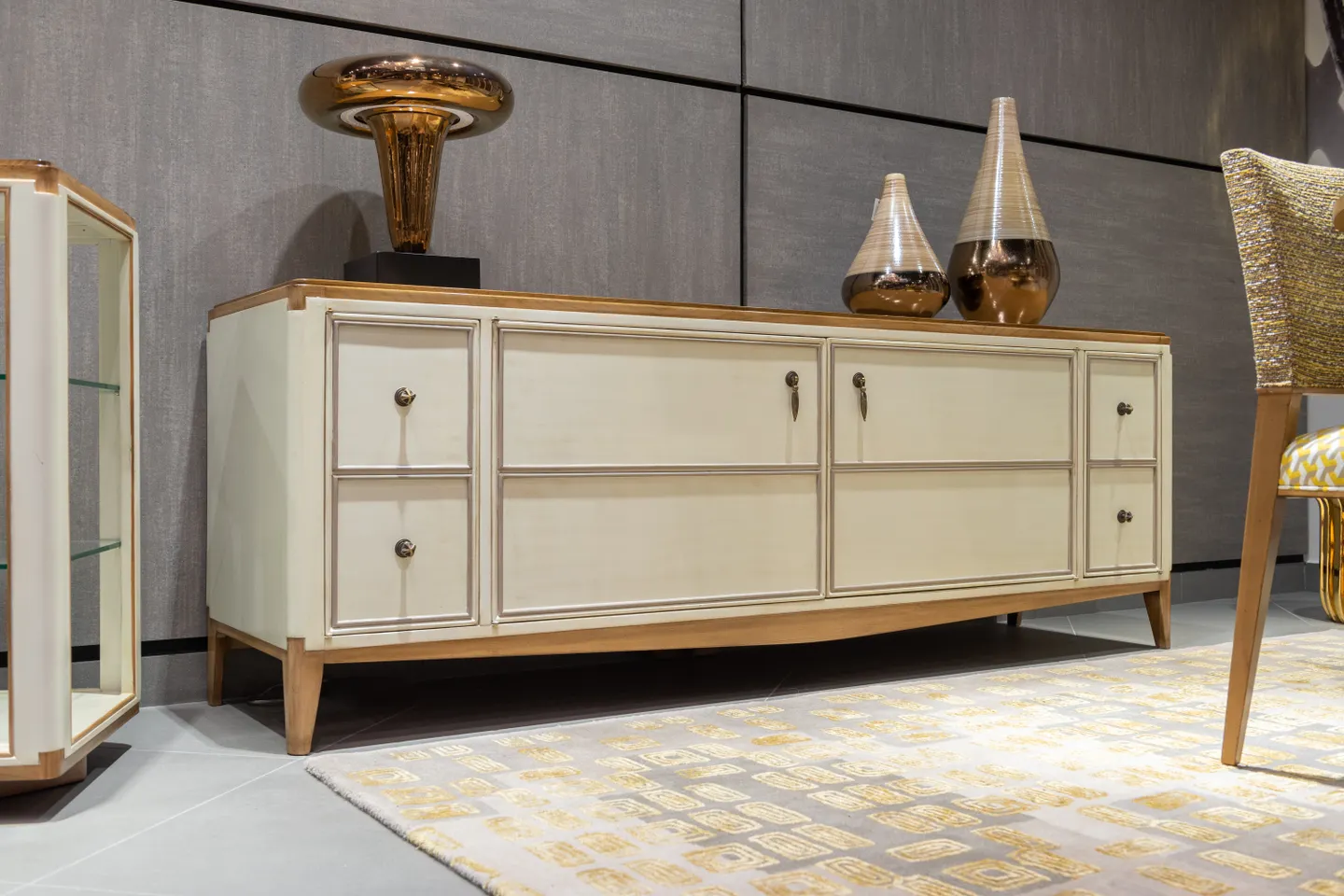
A handsome sideboard can fool you with the promise of more storage. Close the doors and every board, napkin and serving bowl vanishes. Open them just before dinner and the platter you need is behind a stack of plates too heavy to move with one hand. You can prevent that outcome by shopping with the platter's measurements, an understanding of who opens the cabinet and a drawing of the space around it.
Furniture follows the contents
Set out the actual things the piece will hold. Add the table leaf if it has nowhere else to go. Lay the large dishes flat and then stand the baskets beside them. Find the measurements that determine useful depth, width and shelf height. A deep serving bowl is wider at the rim than at its base. An upright file can be taller than a cupboard with plenty of space above its shelf, once you take account of a face frame that overlaps the opening.
Now group the objects by when they come out. The napkins used every evening may belong in a shallow drawer right where somebody stands with one hand free. Deep bottles and a seldom-used punch bowl can go into a different compartment. Dishes used for breakfast should be easy to retrieve from the kitchen side. If they live in a dining area, think about carrying them back clean after washing. A few extra steps can matter when they repeat at each meal.
Draw the cheapest credible arrangement before shopping. Perhaps one existing chest holds what you need and the issue is a stack of heavy bowls. Try moving them to an open shelf near the dining table for two days. A freestanding cabinet can provide a much better enclosure, but this trial helps determine whether the replacement needs a full meter of doors or one really well-positioned drawer.
Measure with the front in motion
Measure the open depth of drawers and hinged doors. A sideboard against a short hall wall can be shallower than a dining unit and still cause more trouble if somebody crosses behind the user. Put a chair or a carton in place of the cabinet and use a card to represent an open door. Check where one person stands to empty the drawer while someone else comes into the room. Repeat the action with a dining chair pulled back as if its occupant has just stood up.
Sliding doors make sense where a broad swing would block walking space. They usually expose part of the width at a time, so check that a long object can enter the available opening. Some cupboards use dividers that mean two adjacent compartments cannot be accessed together. A removable shelf may make a compartment flexible, provided it can be removed after the cabinet is against the wall without forcing open a door past its intended angle.
Include trim at the back of the furniture in the measurements. A high skirting board can move the entire piece farther into the room, especially if the legs begin near the rear. Check the gap visually from the side and find out how an appropriate anchor will reach the wall. The installation might require a specific spacer or hardware identified by the manufacturer. Include any lower outlets, radiator valves, heating vents and floor changes in the sketch.
Consider height from the places people see it
Measure the top height with a tray on it. A sideboard for serving needs a comfortable height, a clear patch big enough for the plate and a place for a hot item if used with appropriate protection. Stand at the location and try placing two dishes far enough apart that one can be picked up. With a cabinet under a window, look from the table and see which part of the view is hidden by typical objects on top. A lower cabinet may preserve the view of a garden better than a taller piece with the same footprint.
A sideboard can provide a welcome horizontal line against a large bare wall. Use a tape line to give its length, then try a stack of books or cardboard at its height. Stand in the doorway. If the cabinet ends directly beneath an awkward detail such as a small second window or a patterned wall joint, changing its width or position slightly can give the detail more room to be seen.
Lighting is an optional working part of the cabinet. A lamp can illuminate serving dishes when the overhead light stays low in the evening. Plan a cable route that keeps the path clear and the lead free during installation. The switch should be easy to reach. If a future outlet is needed, discuss it early with an electrician. An extra layer of light is most useful where people really stand and where they wish to see.
Look underneath and inside the showroom model
Open a drawer slowly, then pull it to the extent allowed and examine how much of the back remains hidden under the cabinet top. Pulling the drawer to get a serving utensil should feel easy without pulling the entire cabinet forward. Read the capacities of the shelves and drawer fittings for the actual model. A tall stack of dishes can be heavier than it looks, and a shelf span that suits folded linens may be insufficient for that weight.
Examine hinges and drawer slides and ask what replacements are available. In a used piece, look for water marks in the bottom corners, swollen panel material, loose joints, damaged supports and a rear panel that no longer holds its shape. Bring a light and ask before moving parts. Consider vulnerable finish patches near the pulls and on the top. Someone serving dinner may touch them more with a wet hand than you would in a showroom.
Decide how the floor will be cleaned near the cabinet. Low feet may leave just enough room for dust to enter and too little for ordinary cleaning. A full plinth changes that calculation. High legs can look lighter but put the rear and its cables in view. Consider the base as part of the piece's practical role. Its proportions matter as much to daily care as the profiles of the doors.
Plan a safe freestanding installation
Freestanding furniture can still need securing to a suitable wall. The U.S. Consumer Product Safety Commission's Anchor It guidance covers furniture tip-over and recommends following the maker's installation instructions. Check the cabinet's anchoring requirements, confirm the wall construction and get suitable installation help if you are unsure. Floor-level differences and layers of thick carpet can also affect how a cabinet sits. Correct them by the method allowed in the instructions.
It takes only a short experiment to discover why weight distribution matters. Imagine everyday heavy crockery shelved low down where it is also easier to lift safely. Picture two drawers fully open and a child looking at something colorful on top. Use the furniture as designed and put tempting objects in a different location. If a lease prevents the alterations needed for a safe installation, agree on suitable permission in writing or select furniture compatible with the property.
Budget for delivery and for future use
Small pieces can still be difficult to carry when they are built as one long carcass. Ask the seller for packed and unpacked dimensions, weight and the permitted handling points. A rigid top on a tall piece might be unable to turn at a landing even when the cabinet fits through both doorways. With a used cabinet, ask whether the shelves and doors come off for transit without disturbing the body. The price of careful delivery may change the balance between an assembled cabinet and one built in sections.
For a home you expect to move from, choose an object with a second plausible job. A piece with one deep compartment and an adjustable shelf can store games on one move and dining linens on the next. Estimate how much it would cost to replace a damaged handle or repair a worn top. Ask about spare hardware and write the identification codes inside the product paperwork. A sideboard that comfortably answers two likely jobs can be useful where a very specialized cabinet would struggle.
Let the next room inform the purchase
Suppose a household needs a sideboard between a compact kitchen and a table that seats six. Two doors and an upper drawer might be an ideal combination if the doors can open without stopping people from walking past. A narrow console could be superior if most of the contents are table linens and a few glasses. Make the final decision after mock-serving a dinner, including where used plates and the heavy serving bowl wait before going to the sink.
In a spare living area, the cabinet may hold board games on weeknights and make space for appetizers twice a year. A large sliding compartment can suit that mix. Bring the longest box and imagine lifting it around the face frame. Consider whether the top becomes the right place for a lamp or just another place to set the post. A good sideboard announces very little. When a person needs something, the useful part of the cabinet is open before anyone has to think about how it looks.