Furniture
Choosing a Platform Bed From the Mattress Down
Check mattress support, overall sleeping height, clearance, noise and delivery before choosing a platform bed with a low frame or built-in storage.
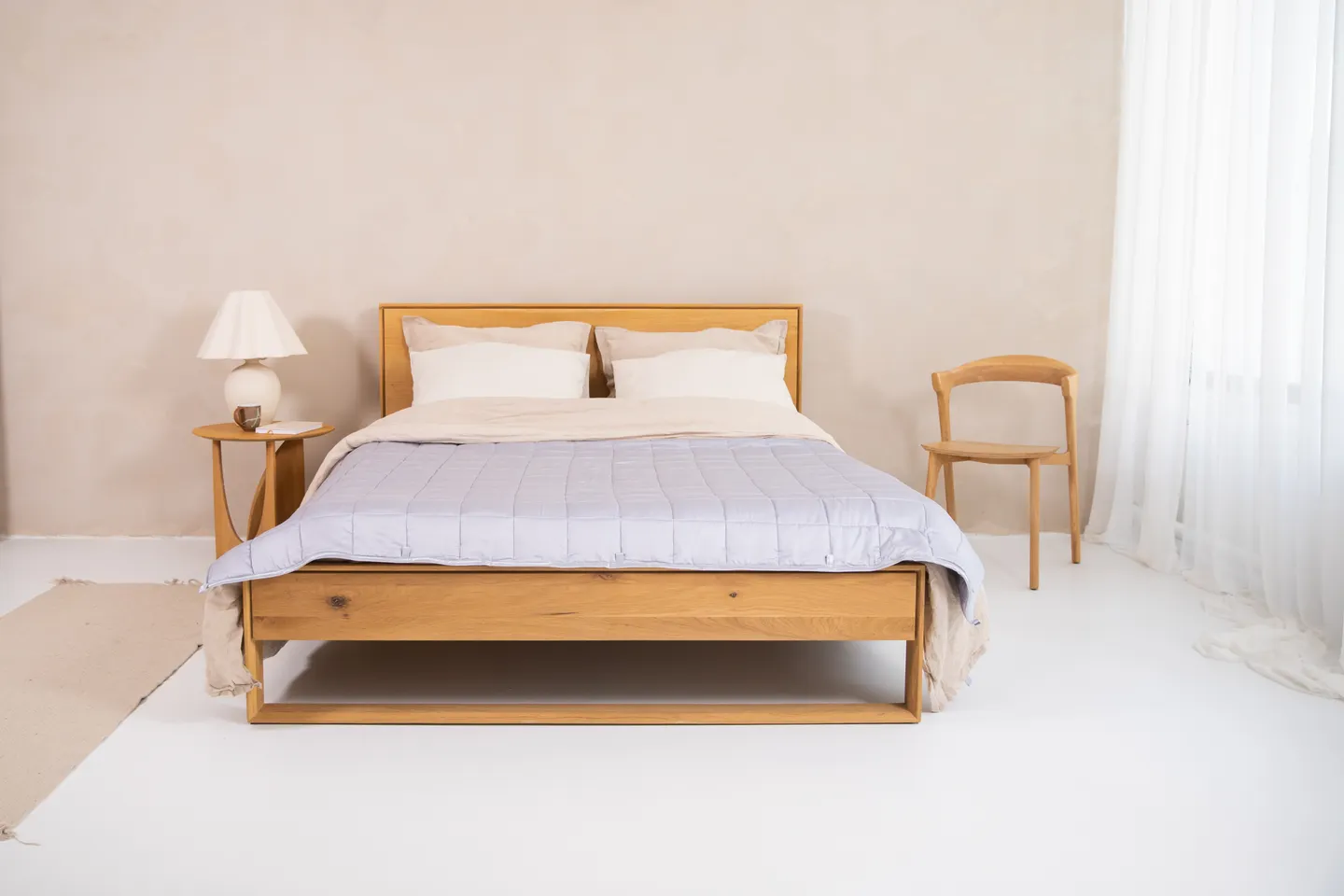
The low oak bed looks calm among the showroom's straight walls and neatly rolled carpet. Take it home, attach a thick mattress, add a chair nearby and the effect may be quite different. A platform bed must support a specific mattress, allow the people in the room to get up easily and leave enough floor to make the far side. Start with what happens at bedtime and again when the sheets are changed.
Ask the mattress maker what goes underneath
Find the support instructions for the exact mattress you plan to use. A description such as suitable for most mattresses is less informative than a drawing and the allowed dimensions. The manufacturer may specify support all the way across, maximum clear gaps between slats, a center rail, floor-contact legs or another configuration. It may distinguish between flexible and rigid slats. Compare its requirements with what the frame maker actually supplies. If they disagree, resolve the conflict before buying either piece.
Record more than the outside size of the mattress. Its corner shape, height and edge support can affect how it sits in a recessed frame. A nominal queen in one market can have different dimensions from a similarly named mattress elsewhere. Take the manufacturer’s actual dimensions. Compare them to the usable cavity, including any corner brackets. A mattress jammed against the rim can make fitting a cover or rotating the mattress difficult. A much wider opening may leave the mattress able to shift farther than intended.
Look for instructions about airflow and cleaning under the mattress. Slatted and panel platforms behave differently. Ask the manufacturers which designs are suitable for the mattress and the room conditions. When you compare price, include the correct support deck if it is priced separately. The price should include a support system that meets the mattress and frame requirements.
Measure the surface you will get up from
Measure from the finished floor to the top of the mattress in a nearby bed that you find comfortable. Then compare with the sum of the proposed deck height and mattress height, adjusting for any inset and the amount the edge compresses when you sit. A low bed can feel spacious to look at and awkward to use at three in the morning. Test getting up from the proposed height quietly and with both feet on the floor.
Account for other people who will use the room. A bed frame for a guest suite may work better at a more accommodating height than a low platform chosen for a particular view. If a person expects to use a mobility aid, discuss the needed support and approach with an appropriate professional and account for its actual dimensions. A deep outer rim can prevent someone's feet from coming close to the safest standing position even if the top height itself was well chosen.
Bring the bedside table into the comparison. A table that worked with a tall mattress may place a sharp edge beside your face when the sleeping surface comes down. Check both the height of the top and how safely a lamp or glass can be reached when you are sitting. A lamp switch below the frame can become difficult to locate. A wall-mounted light or a smaller, lower table may suit the new height.
Make the bed on the plan
The footprint in an online listing can be wider and longer than the mattress by several inches on each side. A generous ledge may be useful in a broad room and intrusive in a narrow one. Mark the outside edges of the frame with a strip of tape. Put low boxes where people are likely to turn. Check the path to an open closet, a window and the place where the laundry basket lands.
Stand where you will pull a sheet around the far corner. A platform tight to the wall can save floor while adding a weekly awkward reach. Check whether the clearances and attachment of a headboard make it easy to lift the mattress as its instructions permit. With a fitted sheet, plan how two people will pass the fabric across the bed if both sides are hard to reach. Usable room around the perimeter matters each time someone changes the bedding.
When a platform is close to a window, check whether the actual furniture interferes with ventilation, window operation or safety. Do the same at a heater or wall outlet. Allow suitable clearances and seek building-specific advice if a bed would affect a required exit or service. A headboard against an outside wall may also change the space you have to run cords in a way that can be safely reached and maintained.
Choose furniture storage with your hands in mind
Drawers need additional floor area when extended. Tape the largest drawer travel on the floor, accounting for its handles and the position of the drawer relative to bedside furniture. Bring a blanket and play out lifting it into the open drawer. If you have to move the side table to open the drawer every time, use that compartment for very occasional things. For the everyday hand towels that come out several times a week, a different shelf may make much more sense.
Some platform frames have a hinged lifting deck. Test the complete arrangement using the intended mattress weight and opening height. Check the manufacturer's instructions on how it should be opened and held, the suitable weight range and what must be kept away from moving parts. Confirm that you can reach the items you plan to store without climbing on the frame. If ceiling height is limited or pendant lighting hangs low, check the open shape in section as well as on the plan.
For modest storage needs, clearance for a separate low box may be enough. Measure the height to the lowest supporting rail as well as the decorative side of the bed. Compare it to the box handles and wheels before buying an insert. A thinner bin with a lid can be more useful than a deep one that has to twist past the center leg. A room with no under-bed storage may be easier to clean, provided the frame either allows enough access or closes the lower edge in a way that suits the floor.
Get a feel for the frame as a structure
Ask how the bed connects at the corners and supports its center. Put gentle weight against the side as you would while getting into bed and listen for movement. A floor on display may be very flat. At home, follow the installation instructions for any support or leveling arrangement. Avoid altering a support part to fit around trim or a pipe. The better plan is to shift the frame or choose a different design that can be assembled correctly.
Look at the edges likely to meet your ankles and hands. A heavily projected square corner can feel different beside an alcove than it does on an open showroom floor. A loose removable headboard cushion may be comfortable for reading while a thin wall-mounted panel preserves circulation. Consider where the lamp and supports will sit as part of the same elevation. Check how finish damage is treated before assembling anything. A frame designed to come apart cleanly is worth considering if your next move will be through a narrow hall.
Try the same frame in a room with two doors
In a bedroom with a door at each end of the same wall, the walkway may be a passage as well as clearance around the bed. Mock up the largest size you would consider and ask someone to open both doors to their normal stops. A narrow frame can purchase several useful inches along a side. If the single largest problem is a headboard that stands in front of a switch, look for a frame with a back profile that leaves the switch reachable. The smallest reliable correction often depends on which piece occupies the contested space first.
Allow for bedding that hangs beyond the platform. A large coverlet can disguise a frame's foot edge at night and make a tight turn harder to see in low light. Try a smaller drop or a tucked corner in the mock-up before narrowing the bed itself.
Take a final dimension between the underside of the frame and the floor beside the lowest trim. Check it with the cleaning attachment used in that room. A frame that appears to float above the floor may have one concealed edge too low for the vacuum head.
Confirm what needs to turn on the stairs
Ask for the longest and widest package dimensions, plus any pieces that arrive fully assembled. Include the thickness of the mattress packaging in your route survey. Check the turn at a landing, the depth of a lift and the small part of a doorway reduced by a closer. Bring the designated lifting and assembly instructions home. Take account of the floor space required to lay out the side rails without damaging the room.
At installation, record the support part numbers and keep spare fittings that belong to the model. Confirm supports and fasteners as directed before the mattress goes on. Then step back and open the closet, change the bedside light and walk across the room in darkness with lights available if needed. If everything fits the way it did on the drawing, the platform's quiet appearance will be backed by a room whose everyday movements still work.