Small Spaces
Build a Narrow Entry That Catches the Things You Carry
Create reliable landing places for coats, keys, shoes and wet gear without blocking a narrow entrance.
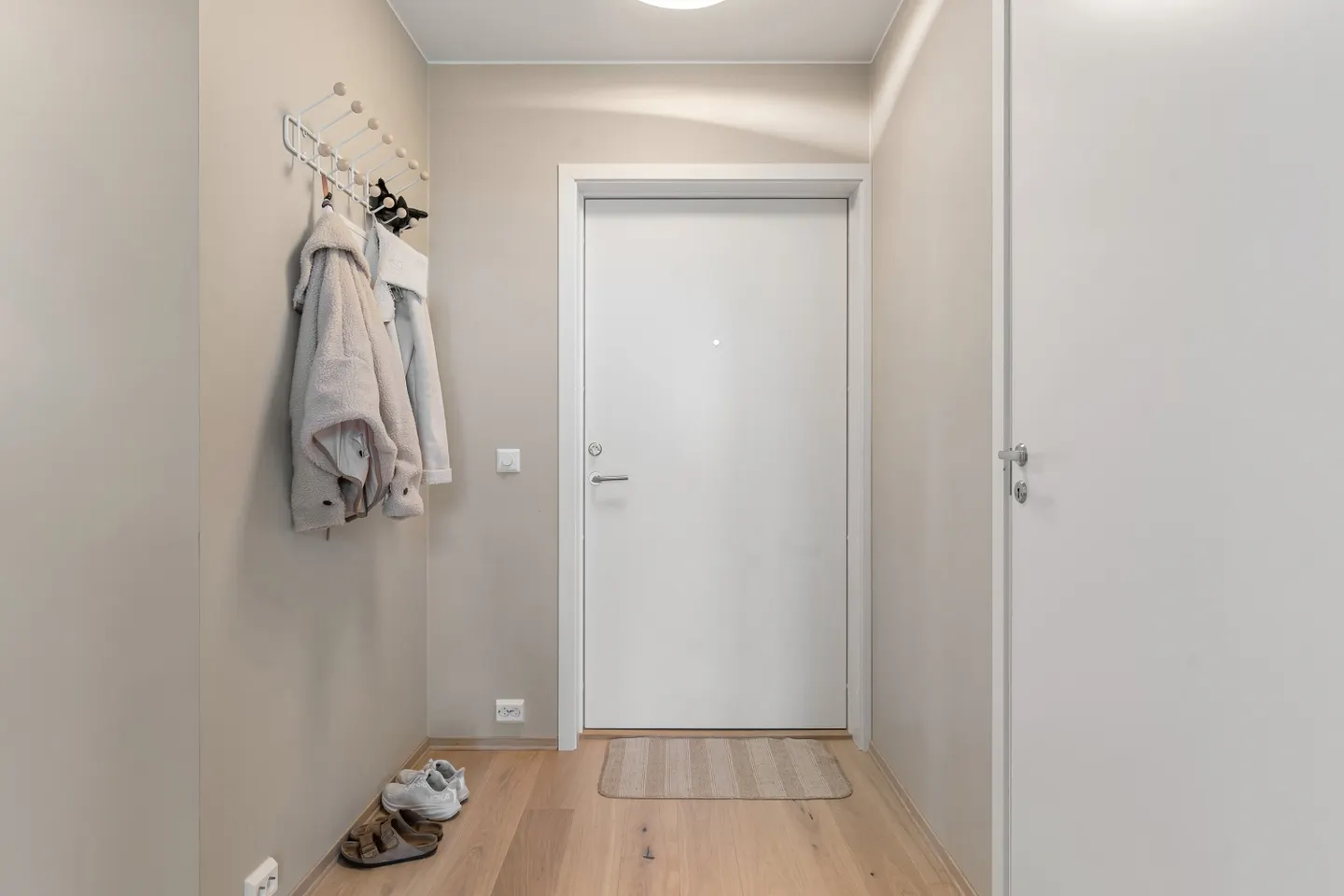
The pile at the entrance is often a little map of how people arrive. Keys fall where the front door first opens. Shoes collect where anyone has a free hand to take them off. Mail goes far enough inside that it can be set down before a wet umbrella. Rather than buying an organizer to cover all the available wall, follow those routes on a rainy afternoon. A narrow entry can work with a shallow landing surface, a few well-placed hooks, and a sensible place to dry something that came home wet. All three can be deliberately separate.
Record the first thirty seconds
Watch where the front door stops and where a person stands to close it. Do this once carrying what you usually have on a weekday, whether it is a grocery bag, a bicycle helmet or a child. Mark the place the bag lands if you put it down. Check whether it overlaps the sweep of the door or prevents another person from passing. Follow your usual path after taking off a coat. Put a piece of paper on the wall where you naturally reach for a hook. That place has practical value even if the most obvious location for a coat rack is a couple of feet farther away.
Measure the clear width at several heights because a radiator, baseboard, wall light or trimmed edge can make the usable width different from its floor measurement. Check the outline of the open door, including its hardware. In apartments, identify any required route or feature that must stay clear. If the doorway opens in a way that leaves a strip of wall hidden behind it, don't assume the strip is unusable. A very shallow piece can fit there if door swing, handle clearance and fixing details allow. On the other hand, a row of coats projects well beyond the hooks it hangs from, and it is easy to forget that extra thickness.
Give the smallest landing surface a strict job
A usable key shelf can be little wider than a hand and long enough for a shallow dish, with room to pick up what it holds. Put it where a person can unload keys before removing their bag. A slightly raised edge can keep a small item from skidding to the floor. Check that the front is easy to wipe and that you can see into the tray from a normal standing position. Avoid shelves that put receipts over keys. Decide whether mail is worth a separate upright slot, and give the slot a real destination such as a near-daily sorting spot in the kitchen. A full tray without a regular emptying routine is only a new version of the old pile.
Clamp cardboard at the proposed shelf height or try a nearby piece of furniture. Check elbow space as you open and close the door. At a tight corner, a rounded edge may be better to brush past than a hard square one. A higher shelf can be easy to approach if nothing hangs below it. If different people need to reach the keys, agree on a height that supports their real use or provide separate reachable spots. Check load and fixing suitability for wall shelves and hooks, and get permission where the tenancy or building requires it. Where holes are limited, see if a small, stable surface somewhere just beyond the door is easier to use.
Plan for outerwear at full thickness
A lined raincoat on a hook can occupy more space than the shelf beneath it. Hang the heaviest coats on temporary hooks or use a mock-up with the real garments, then walk past carrying a bag. Leave room for their sleeves to hang naturally without blocking a switch or catching on a handle. Offset adjacent hooks vertically where that helps separate a coat and a folded bag. Think about the ends of the hook run. The highest or closest hook may get everything while the far one never gets used. Designate the easiest hook for the item most likely to end up on the floor.
A few hooks can be more useful than a whole rack if the household keeps only current coats here. Arrange alternative storage for formal coats, guest bags, or bulky winter gear that is out of season. An over-door rack can be practical where the hardware, finish and door movement allow it. Test whether it changes how the door latches, whether it rattles, and what happens when the door is fully open. The side of a secure adjacent cabinet may be an option if its manufacturer or installer can confirm an appropriate attachment. Preserve the daily route even when the biggest items happen to be home at the same time.
Decide what happens to shoes that are still wet
Measure your largest customary shoes or boots and note how easy they are to take off. A simple mat inside the door can catch water during arrival, while a tray with a contained edge can handle boots drying in a quieter part of the entry. Leave the surfaces easy to lift and dry. If an entry is narrow enough that a tall boot must lean into the path, find another drying place before buying solid storage. A closed shoe cabinet can help visually once shoes are dry. Consider how well a tilting bin holds taller sizes, how much floor area it uses when open, and how the cabinet must be secured.
A bench can be useful for removing boots, especially for someone who needs to sit down. Empty dimensions don't predict use. Put a chair in the proposed location and sit with one foot in front, then ask someone carrying a bulky item to pass. If the trial blocks the door or nearest corner, try a shorter bench outside the tightest section or evaluate a suitably supported folding seat. A higher seat may be easier for some people to use, but the design also has to accept a steady hand or support where needed. Take advice on suitable installation if stability or transfer is part of its function.
Where seating matters less, a clear floor patch can sometimes make the whole entry feel easier. Store the one daily pair per person in a slightly wider area downstream. Encourage everyone to bring muddy shoes that far only if the flooring and cleaning routine comfortably allow it. A mat with edges that lie flat and a safe backing can keep the threshold more usable. Check the door clears it while the mat is freshly washed or slightly damp. A handsome thick rug that nudges the door toward a jam during the very weather it is meant to help is a poor fit.
Separate the long things from the things that should lie flat
An umbrella does well in a contained stand where it can drip and can be lifted out without hitting a picture or shelf. In a very narrow hall, the stand might belong around a slight turn away from coats. Use a cleanable base and keep it sufficiently stable. A long dog lead may be better hung at a different height from a child's school bag. Quick access matters for things used on the way out, while wet objects need ventilation and an easy surface under them. Give a laundry bag or bike helmet a visual place to go so neither needs to occupy all the available hooks.
Think horizontally about small items. A shallow wall pocket near the door may hold a pair of gloves, while a container at a lower level can catch the bicycle lock. A pocket with a single recognizable purpose is easier to clear and clean. In a childcare routine, a picture on a bin can help someone know where their gloves go. A household with different morning departures may prefer each person's spot grouped on one side. Track which arrangement makes sense by looking for what people naturally identify and repeat. A tiny hallway is an unforgiving place to require continual explanations.
Test the crowded version and the night version
After a few days, put every current coat and bag in its designated place. Close the door, pick up the heaviest things you commonly bring inside and travel through the entry again. Check the narrowest point from floor to shoulder level. At night, see whether you can find keys and spot the edge of a mat without a ceiling light glaring into a nearby room. A lamp outside the door swing or a well-shielded existing fixture can help distinguish the surfaces. Before buying a light, mark its position and check there is room to reach the controls and no cable in the way.
Take pictures of the entry when it's full and after it has been reset. What landed in the wrong spot? A pair of gloves balanced over shoes can indicate a missing shelf, while paper piled on top of a shoe cabinet may indicate that mail needs to get farther into the home. Make one adjustment at a time and let it live through a normal workweek. Give storage preference to the things that would otherwise land in the passage. Whatever furniture remains should leave enough air around the first step inside that coming home feels like the end of a trip.